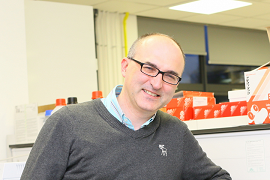
 Professor Mario Siervo, Co-Editor-in-Chief
Prof Siervo is currently a Professor of Human Nutrition and Physiology at Curtin University, Perth, Australia. Prof Siervo is a clinical academic specialized in clinical nutrition and metabolic medicine. He completed his medical degree and clinical training at the University of Naples "Federico II". He obtained an MSc in Public Health Nutrition from the London School of Hygiene and Tropical Medicine and completed his PhD in Human Nutrition and Physiology at the University of Cambridge. He has worked in prestigious research institutions in England (MRC Human Nutrition Research in Cambridge, Human Nutrition Research Centre in Newcastle and Metabolic Physiology group at the University of Nottingham) and in the USA (National Institutes of Health). He has been awarded prestigious prices for his contribution to nutrition research by the Italian Nutrition Society (2008), British Nutrition Foundation (2013) and by the UK Nutrition Society (Julie Wallace Award 2017 and the 2021 Silver Medal for Excellence in Nutrition Research).
Prof Siervo has published more than 220 publications, contributed to three book chapters and co-edited two books. He is the recipient as PI and Co-PI of several grants from MRC, NIHR and Alzheimer's Research UK. His current research interests include the 1) definition of sarcopenic obesity as a diagnostic phenotype and evaluation of its association with disease risk and 2) investigation of the role of nutritional factors, such as inorganic nitrate, vitamin C or salt consumption, to modify nitric oxide production and test effects on vascular, metabolic and cognitive functions in humans.

